Recipe Cards
What Size Is a Recipe Card? 3×5, 4×6 and 5×7 Compared
There is no single required recipe card size. Here is how the three most common choices compare—and why 4×6 is the best all-purpose format for most home recipe collections.
As an Amazon Associate, Geomorpho Studios earns from qualifying purchases — at no extra cost to you.
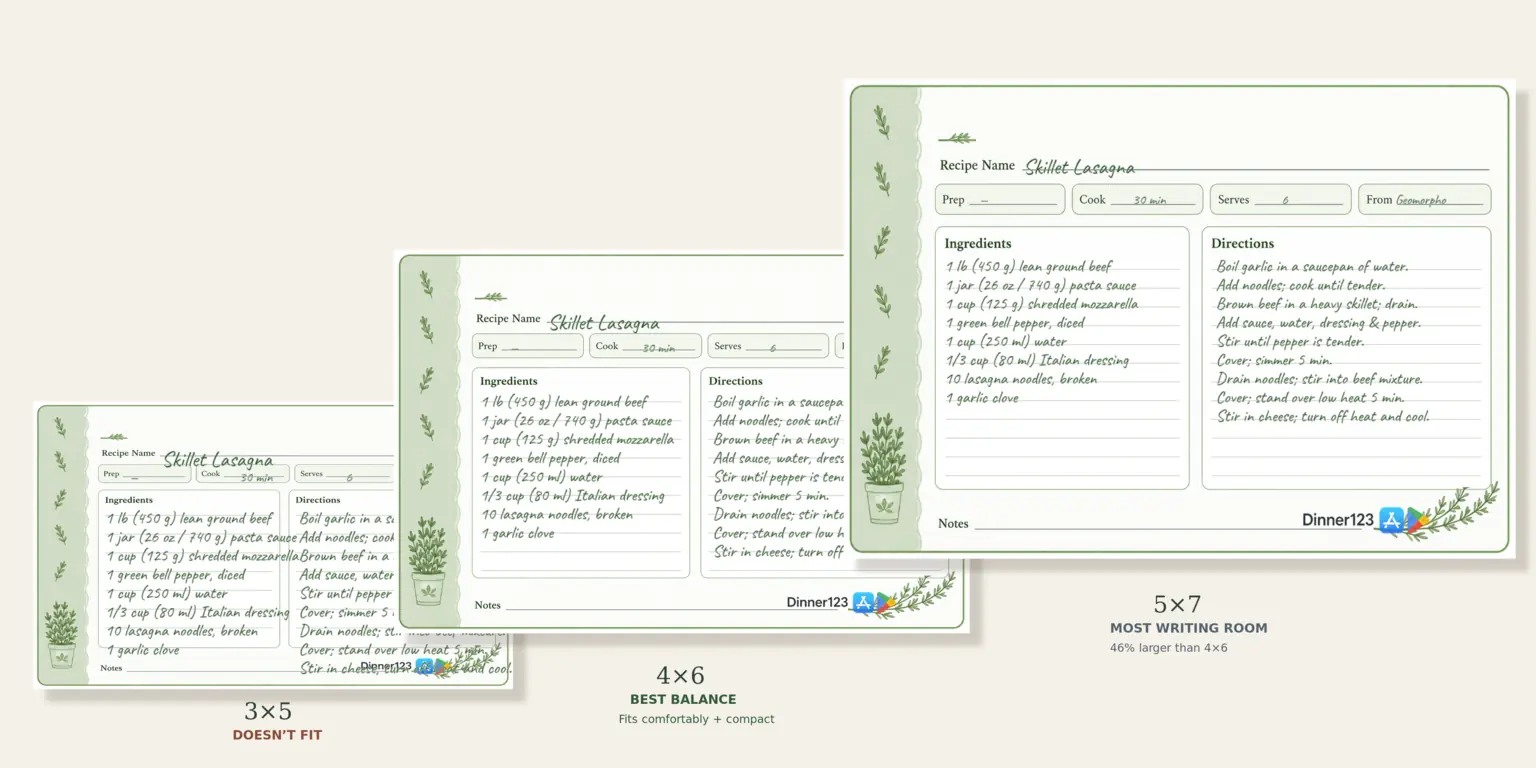
Ask what size a recipe card should be and you will usually hear one of three answers: 3×5, 4×6 or 5×7 inches.
The right one depends less on tradition than on what you cook, how much you write and where the finished cards will be stored.
Quick answer: Choose 4×6 inches if you are starting a recipe collection from scratch. It gives you 60% more total surface area than a 3×5 card without becoming difficult to store. If maximum writing room is your only priority, 5×7 is the better choice; 4×6 is the stronger all-purpose balance. Choose 3×5 for short recipes or an existing 3×5 box.
To make the comparison fair, every example below uses the same botanical card design, the same card-length version of Geomorpho’s Skillet Lasagna recipe, the same 12.5-point handwriting and exactly the same manual line breaks. Only the card dimensions change.
Recipe card sizes at a glance
| Card size | Total area | Best for | Main limitation |
|---|---|---|---|
| 3×5 inches 7.62 × 12.7 cm | 15 sq. in. | Short recipes, compact storage and older recipe boxes | Ingredients and directions can become cramped |
| 4×6 inches 10.16 × 15.24 cm | 24 sq. in. | Everyday recipes and most new home collections | Will not fit a box made only for 3×5 cards |
| 5×7 inches 12.7 × 17.78 cm | 35 sq. in. | Detailed recipes, larger writing and additional notes | Needs a larger box, binder or sleeve |
Not all of that area becomes writing space. Borders, headings, illustrations and margins take up part of every design.
Is there a standard recipe card size?
No single organization sets a mandatory recipe card size. In practice, 3×5, 4×6 and 5×7 inches have become the most familiar formats. That means “standard” can describe several sizes rather than one universal measurement.
Three-by-five cards are closely associated with traditional index cards and older recipe boxes. Four-by-six cards have become a popular modern choice because they provide substantially more room while remaining compact. Five-by-seven cards are the oversized option for people who value writing space more than compact storage.
The most important rule is practical: the cards, box, dividers and protective sleeves must all use the same dimensions — two formats can both be described as standard and still be incompatible.
3×5 recipe cards: compact and traditional
A 3×5 recipe card is three inches high and five inches wide. Its 15 square inches of total surface make it the smallest of the three common formats.
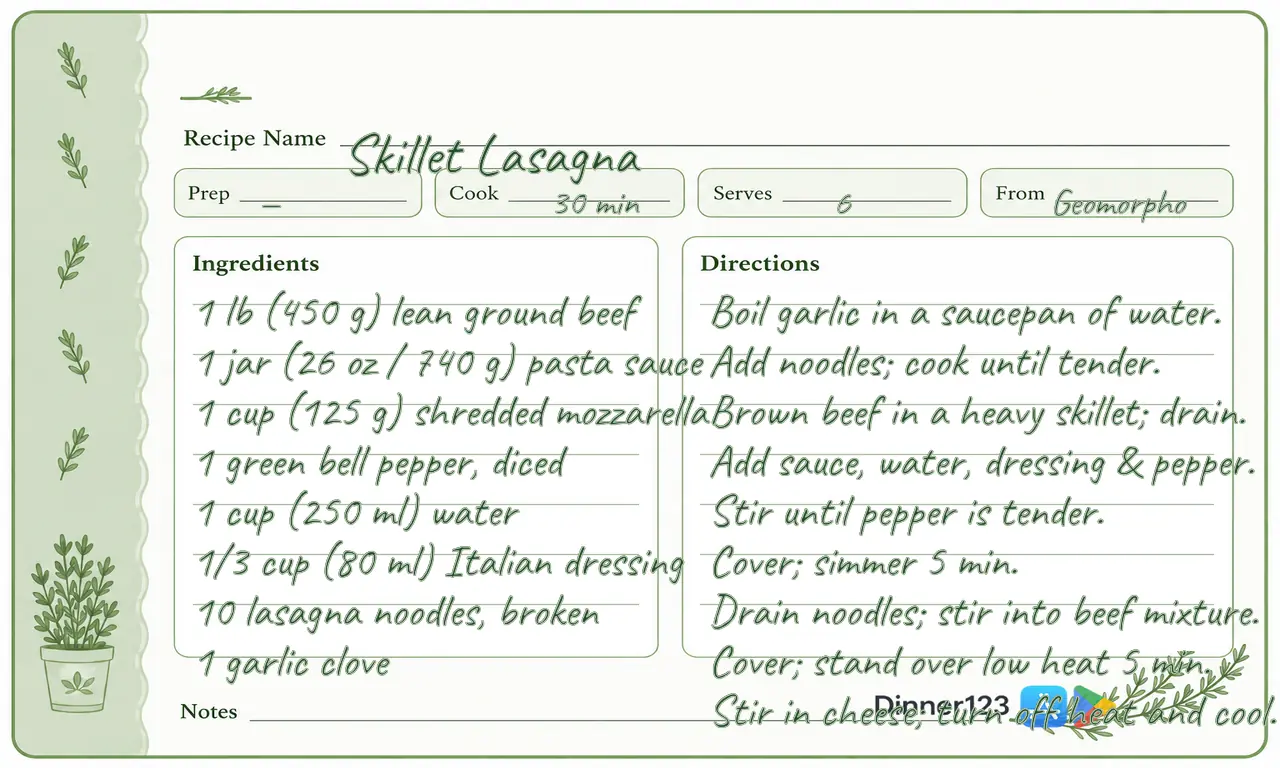
That limited space is not necessarily a disadvantage. A 3×5 card works beautifully for recipes that can be recorded without long explanations: dressings, sauces, spice blends, drinks, simple cookies and familiar family dishes. It also keeps a large collection physically compact.
The tradeoff is that every word has to earn its place. Long ingredient names, alternatives, temperatures and timing notes can quickly crowd the card. Writers often compensate with abbreviations, smaller handwriting or directions on the reverse.
Choose 3×5 when:
- You already own a 3×5 recipe box or matching dividers.
- Most of your recipes are short and familiar.
- Compact storage matters more than room for commentary.
- You enjoy the traditional index-card format.
Think twice about 3×5 when:
- You write large or prefer not to abbreviate.
- Your recipes regularly include more than one component.
- You want space for substitutions, family notes or troubleshooting tips.
Ready to print? Download Geomorpho’s 100 free printable 3×5 recipe card templates in four collections.
4×6 recipe cards: the best all-purpose choice
A 4×6 recipe card has 24 square inches of total surface—60% more than a 3×5 card. That extra room is noticeable. Ingredients and directions can sit in separate columns, handwriting can remain comfortable, and there is usually room for preparation time, servings and a short note.
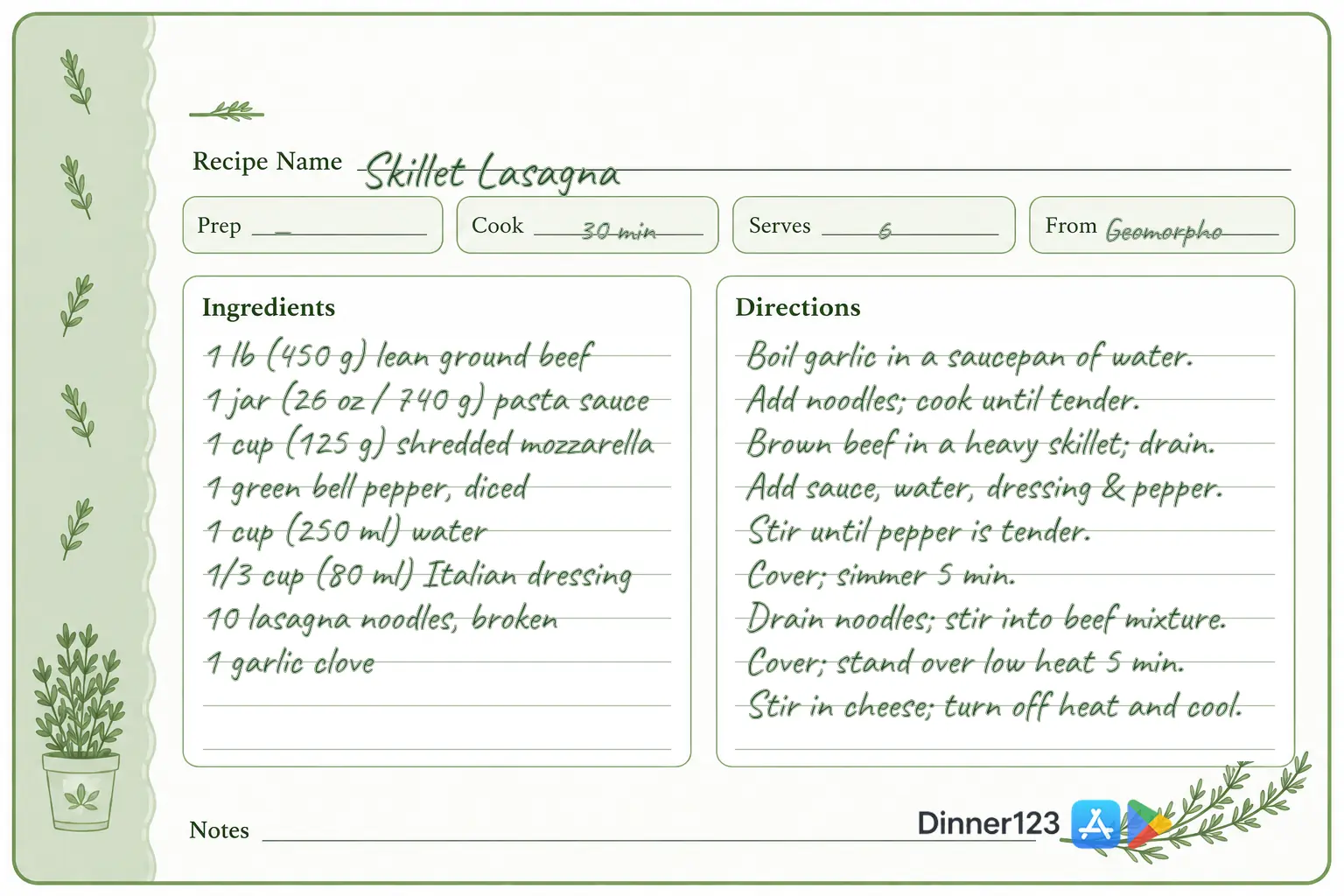
At the same time, a 4×6 card still feels like a recipe card rather than a sheet of paper. It is easy to handle at the counter and fits the many boxes, sleeves and dividers made specifically for 4×6 collections.
This balance is why Geomorpho’s 100 free printable recipe card templates use a 4×6 landscape layout. Each printable PDF places two cards on a US Letter sheet and includes crop marks, while the PNG downloads provide one individual image per design.
Choose 4×6 when:
- You are beginning a new recipe collection and do not have to match an existing box.
- You want enough room for normal weeknight recipes without using oversized cards.
- You prefer ingredients and directions displayed side by side.
- You want a widely available size for boxes, sleeves and dividers.
5×7 recipe cards: the most writing room
A 5×7 recipe card provides 35 square inches of total surface. That is about 46% more than a 4×6 card and more than twice the area of a 3×5 card.
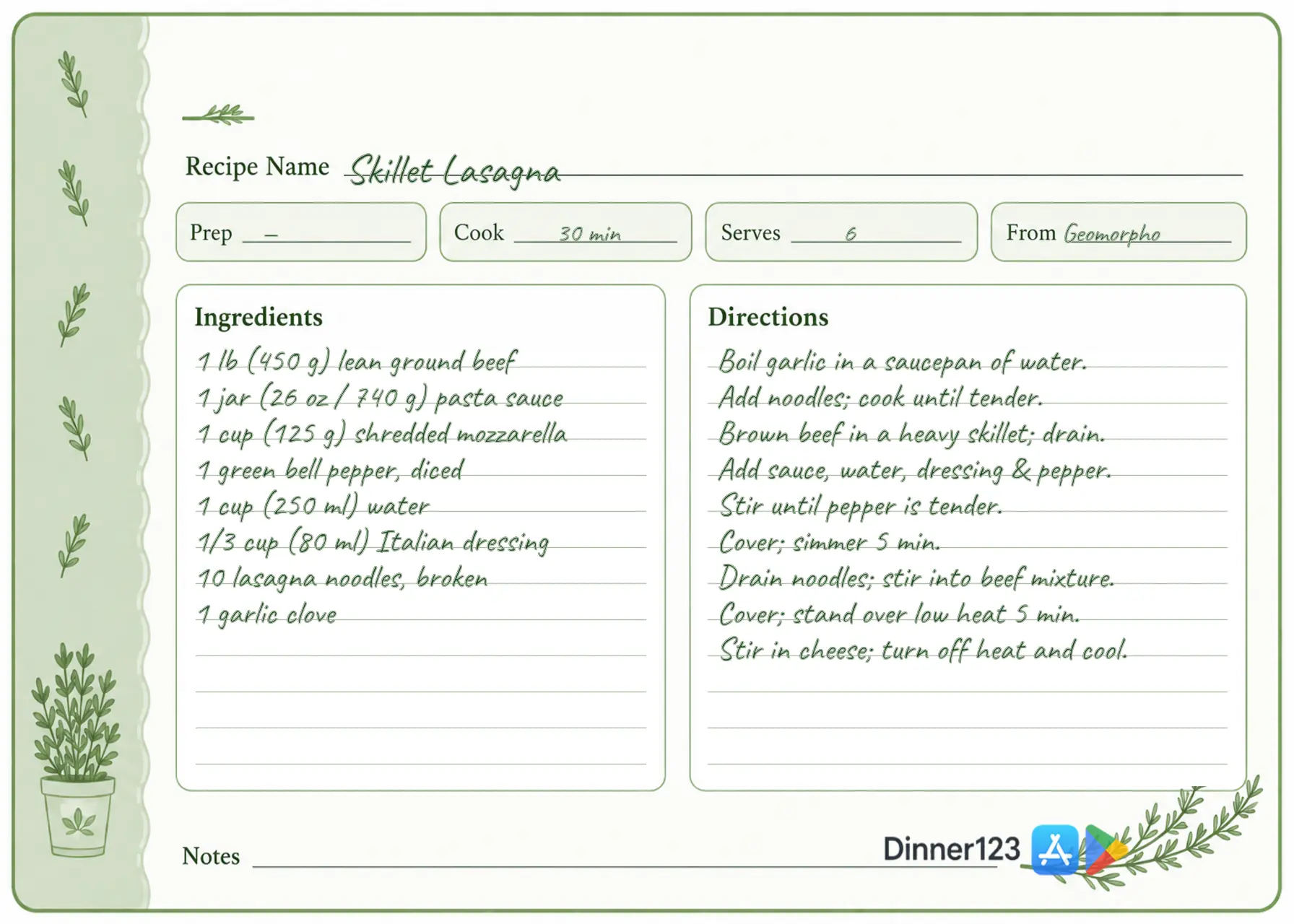
The extra space is useful for recipes with several stages, long ingredient lists or important notes. It also allows for larger handwriting and more generous spacing, which can make a recipe easier to read while cooking.
Five-by-seven is especially practical for holiday dishes, baking formulas, family recipes with a story attached, or recipes you frequently modify. The cost of that comfort is physical size: you will need a 5×7 box, larger sleeves or a binder designed to hold the cards.
Choose 5×7 when:
- You regularly save complex or multi-stage recipes.
- You prefer larger handwriting or more white space.
- You want room for substitutions, memories and serving notes.
- You plan to store the cards in a binder or purpose-built 5×7 box.
Ready to print? Download Geomorpho’s 100 free printable 5×7 recipe card templates in four collections.
Landscape or portrait: does orientation matter?
The dimensions describe the same card whether it is used vertically or horizontally, but orientation changes how the information fits.
Landscape cards
Work well when ingredients and directions appear side by side, and are easy to read while sitting upright in a recipe-box holder. This is the orientation used by Geomorpho’s printable 4×6 cards.
Portrait cards
Favor a single-column layout. They can work well in binders or for recipes written as one continuous series of steps, but they provide less horizontal room for long ingredient names.
Neither orientation is inherently better. Consistency matters more: choosing one orientation makes a collection easier to browse and keeps dividers and sleeves aligned.
Measure your storage before choosing a size
If you already own a recipe box, binder or set of sleeves, measure the usable interior rather than relying only on the label, and allow a little clearance so cards can be removed easily. When buying new storage, choose the card size first and then buy the box—leaving room for both the cards and any protective sleeves you intend to use.
Printing recipe cards at the correct size
When printing a ready-made template, choose 100% or Actual Size in the print dialog. Turn off options such as “Fit to Page” or “Scale to Fit,” which can quietly change the finished dimensions.
Also remember that 3×5, 4×6 and 5×7 do not share the same proportions. Simply resizing a 4×6 design to another width can create white margins, stretch the artwork or crop part of the border. For the cleanest result, use a template designed for the intended dimensions.
Before printing an entire collection, print one test sheet on ordinary paper. Measure the trimmed card with a ruler and place it inside the intended box or sleeve. Once the sizing is correct, switch to heavier card stock.
Recommended card stock


Which recipe card size should you choose?
For most people starting a new collection, 4×6 is the safest choice. It offers a meaningful increase in writing room over 3×5 without requiring the larger storage footprint of 5×7.
Whichever size you select, commit to it before purchasing boxes, dividers and sleeves. A consistent collection is much easier to organize—and much more satisfying to use.
Ready to start a 4×6 collection?
Choose from 100 blank designs in four collections. Every template is free, requires no sign-up and is available as a printable PDF or individual PNG.
Recipe card size FAQ
What is the most common recipe card size?
Three-by-five and 4×6 inches are both common. Three-by-five is the traditional compact format, while 4×6 provides more practical writing space and is a strong all-purpose choice for a new collection.
Will a 4×6 recipe card fit in a 3×5 recipe box?
No. A 4×6 card is one inch taller and one inch wider than a 3×5 card. Choose a box specifically designed for 4×6 cards.
Is 5×7 too large for a recipe card?
Not if you value writing space. A 5×7 card is useful for detailed recipes, larger handwriting and notes, but it requires larger storage than the traditional formats.
Can I print 4×6 recipe cards on US Letter paper?
Yes. Two 4×6 cards can be arranged on one 8.5×11-inch sheet. Geomorpho’s printable PDFs already use this layout and include crop marks for trimming.
What size are Geomorpho’s printable recipe cards?
Geomorpho offers 300 printable recipe card templates: 100 each in 3×5, 4×6 and 5×7 landscape formats. Every collection is available as print-ready PDFs and individual high-resolution PNG files.

Plan dinners the easy way with Dinner123
Browse recipes, plan your meals and build your grocery list automatically.
Explore Dinner123Coming soon for Android and iPhone.